

In today's rapidly changing world, the ability to be able to think critically is usually more vital than ever before for student success. As young enrollees navigate complex info and diverse opinions, they need to equip themselves with essential critical thinking about skills that expand beyond the class. These skills not merely enhance academic performance but also put together students to face real-world challenges together with confidence and durability. Understanding and establishing these capabilities could set the groundwork for lifetime of knowledgeable decision-making and problem-solving.
Critical thinking encompasses a range of features, including logical thinking, independent thought, and the ability to evaluate and evaluate data. The goal is definitely to foster a mindset where students are not simply passive recipients of knowledge but active members in their mastering journey. This write-up will explore how you can identify strong essential thinkers in the classroom, important attributes of effective college student critical thinkers, plus the vital role of questioning in addition to reflection. By concentrating on the essential expertise every student wants, educators can nutriment a generation associated with thoughtful, curious, and even capable individuals geared up to tackle typically the complexities of the future.
Essential Critical Thinking Skills
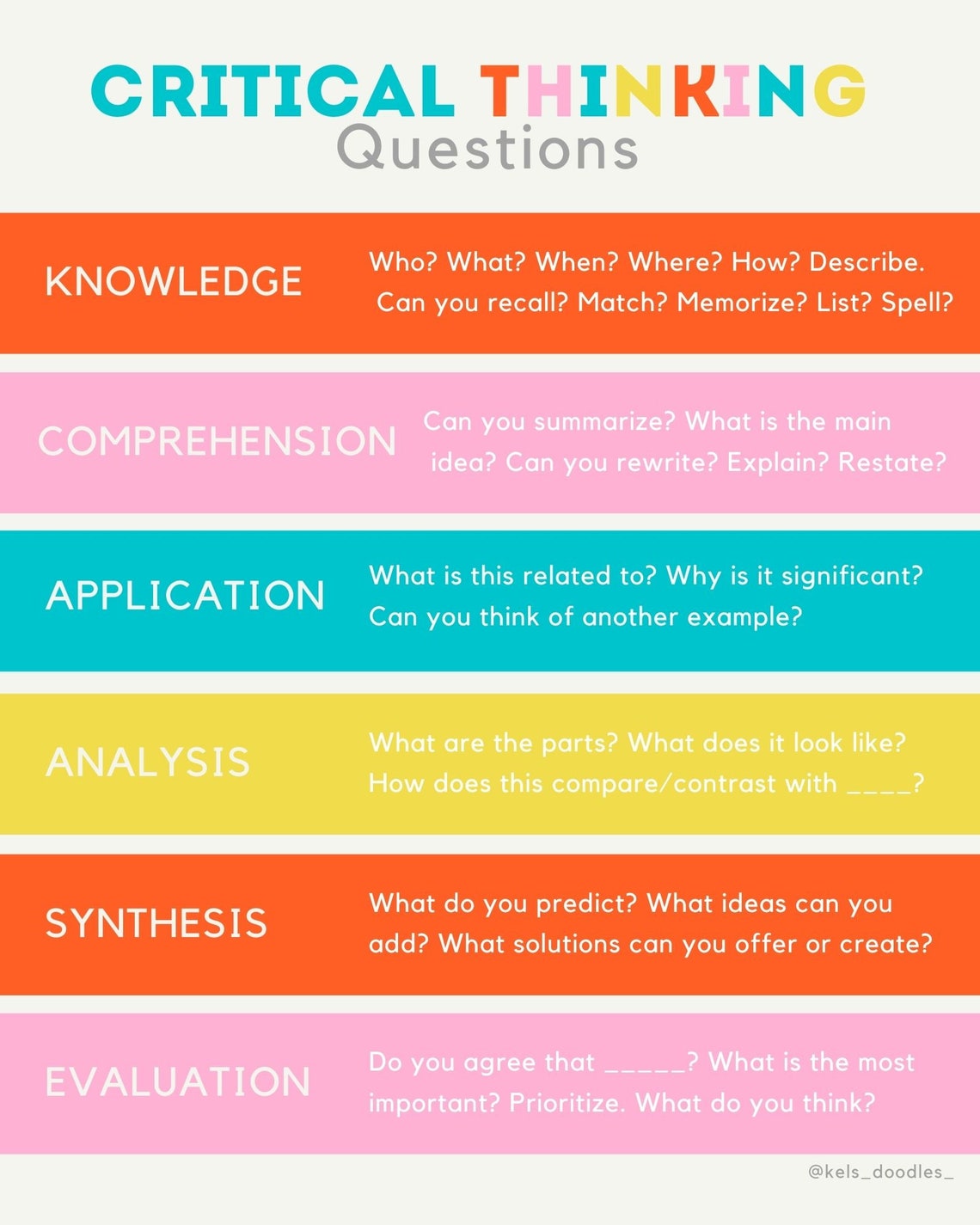
To succeed scholastically and beyond, learners must cultivate essential critical thinking skills that enable all of them to analyze data, solve problems, and make informed decisions. One of the foundational skills is usually logical reasoning, that involves evaluating arguments and even identifying logical myths. Students who can separate sound thinking and emotional medical interests are better prepared to navigate sophisticated subjects and engage in meaningful discussions. This skill not only aids inside their comprehension associated with academic material although also prepares them for real-world difficulties.
One other crucial skill will be the ability to question assumptions. Students have to be encouraged to be able to challenge accepted best practice rules and beliefs, cultivating an environment that values inquiry and even skepticism. By creating curiosity and a new habit of inquiring " why, " students gain deeper insights into various topics. This important questioning not simply strengthens their understanding but also helps bring about intellectual independence, letting them form their individual conclusions based upon evidence as opposed to acknowledging information at confront value.
Lastly, effective problem-solving abilities play a vital role inside critical thinking. This specific includes identifying problems, brainstorming potential remedies, and evaluating the particular outcomes of various approaches. Students ought to be taught to apply a thorough strategy to problem-solving, which often enhances their deductive thinking and creative imagination. By nurturing these types of skills, educators can equip students using the tools essential to tackle challenges within their academic pursuits plus future careers.
Identifying plus Evaluating Critical Thinkers
Recognizing strong critical thinkers in the school room begins with observing their capability to evaluate information objectively. critical thinking in education who exhibit robust analytical skills often engage in innovative discussions and display an eagerness in order to explore deeper meanings behind concepts. These people pose meaningful issues that stimulate conversation rather than accepting information at face value. Look for students who challenge assumptions and motivate their peers to do exactly the same, because this is a new hallmark of effective critical thinking.
When assessing a student’s problem-solving abilities, it is essential to evaluate their method of dealing with complex situations. Solid critical thinkers will be not only in a position to identify difficulties but also come up with multiple solutions in addition to weigh the benefits and cons of each option. These people display a tendency toward researching and collecting information from various sources before reaching conclusions. Observing just how students navigate issues can provide regarding their decision-making techniques and their ability to think on their own.
An additional key consideration is the role of asking yourself. Critical thinkers frequently ask probing inquiries that reveal their own curiosity and readiness to explore subjects beyond superficial comprehending. my sources can easily differentiate between details and opinions, knowing biases in their own own thinking because well as inside others. Encouraging a new classroom environment wherever questioning is welcomed paves the approach for identifying learners who embody robust critical thinking expertise, ultimately fostering a culture of query and deeper understanding.
Improving Critical Thinking found in Students
Fostering critical pondering skills in college students requires a multi-dimensional approach that engages them at various cognitive levels. Instructors can create a good environment where query and exploration are encouraged with some open-ended questions into classroom discussions. Not only does this stimulates curiosity and also requests students to dig deeper into the theme matter, allowing all of them to form contacts between concepts and develop their unique insights. By emphasizing the particular importance of asking yourself, educators help students understand that critical pondering is just not merely concerning finding the right answers, nevertheless about understanding typically the processes that may lead to individuals answers.
Furthermore, integrating collaborative activities for instance debates and group jobs can significantly improve critical thinking expertise. Such activities encourage students to articulate their thoughts evidently, listen to varied perspectives, and significantly evaluate arguments offered by way of a peers. By means of these interactions, students discover how to challenge assumptions and recognize biases, in others in addition to in their very own thinking. This not simply cultivates an atmosphere of respectful talk but also helps to students develop successful argumentation skills which might be essential for educational success and informed citizenship.
Finally, incorporating reflecting practices into the learning process may greatly improve critical thinking abilities. Students should be motivated to regularly evaluate their own knowing, consider feedback by peers and educators, and reflect in their decision-making techniques. This self-assessment helps them recognize their own thought patterns, top to greater self-awareness and independence in their thinking. As they learn to balance logical reasoning with emotional insights, students may emerge as assured thinkers ready in order to tackle real-world challenges with an analytical mindset.